
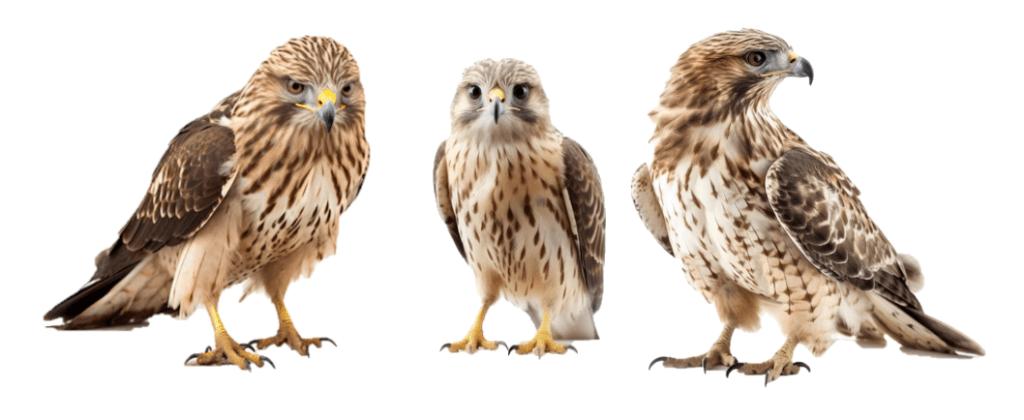
Birds of Prey have been a part of our history for almost 10,000 years (Love The Garden, 2024), they have assisted our ecosystems ensuring sick animals are not spreading to decrease populations (IFAW, 2021). Unfortunately, not everyone seems to understand their need or their task within our planet as according to the RSPB, over the past 15 years 1,300 birds of prey have been illegally killed across the UK (Prior, 2024).
Therefore, what is happening to these amazing creatures, and why on earth is this potentially occurring to them?
Birds of Prey and their purpose in the UK
Birds of prey, and no not the DC superhero version for those comic book geeks, the actual birds (DC, 2024), have supposedly been within the UK and used by man for almost 10,000 years (Love The Garden, 2024). There are over 560 species that are known today, which all play an important but unique role in ecology whereby they maintain the environmental health of their natural habitats, removing old, sick and weak animals from prey populations to monitor, as well as control, their numbers (IFAW, 2021).
Conversely, despite their usefulness within the natural environment some species are on the IUCN red list. For instance, according to figures, 560 of the species is within the red list with 18% being considered either vulnerable, endangered, or critically endangered, whilst 13% are near threatened. To make matters worse, even though 142 other species are considered a least concern, 38% have declining population trends, and if this continues will also be classed as threatened in the very near future (McClure et al., 2018).
Which species are being targeted the most, and why are they being targeted?
According to Prior (2024), the species that have been attacked illegally are from hen harriers to golden eagles and there does not seem to be a preference as to which are being struck down. The RSPB (2024) further confirm that over the past 15 years 1,344 birds of prey have been killed, and sadly this does not look like its about decrease as out of all these crimes not one has been prosecuted. To make matters worse in April 2024 a female Red Kite had to be euthanised as she had injuries that were ‘beyond repair’ from a shooting. Furthermore, she was potentially the 18th Red Kite to be killed since the re-introduction of species into the wild (RSPB, 2024).
In regard to why these amazing creatures are being targeted there seem to be two main theories. One is that they are deliberately being targeted to increase game bird population to shoot for sport, namely Grouse (Spyro, 2024). Furthermore hotels, pubs and restaurants are also predicted to lose millions of pounds in revenue because of the birds of prey actions (The Moorland Association, 2024). This was previously speculated in 2017 stating that birds of prey had flown over grouse shooting areas taking chicks, which inadvertently conflicted with gamekeepers in the UK. Furthermore, figures had shown that 68% of tagged hen harriers vanished on or near grouse moors where shooting supposedly nearly always occurred (Countryfile, 2017). However, it has been recorded that the Red Grouse in particular is estimated to be a population of 230,000, meaning that they are not necessarily in danger by the birds of prey, and does make it potentially an excuse gamekeepers are using to shoot them (GWCT, 2024).
Conversely, the other theory is in order to protect livestock and pets. In 2016 this was also theorised in Northern Ireland when birds of prey such as Buzzards were supposedly eating Carrion, Rabbits, Rats as well as medium sized birds. By killing the birds of prey it potentially provided these animals protection. Moreover, Peregrine Falcons, Sparrowhawks and Golden Eagles were the other few popular species being killed, supposedly to protect other animals, but a total of 44 were only reported at this stage, thus not taken notice of (Boussie, 2016).
What is being done to prevent them being killed?
Despite these killings occurring, they are in fact protected by Wildlife and Countryside Act 1981, specifically under Schedule 1, confirming that no bird of prey can be shot, poisoned, or trapped as well as be intentionally or recklessly disturbed whilst building a nest, nesting or caring for chicks without a license from the British Trust for Ornithology on behalf of Natural England. Furthermore, it is an offence to be in possession of the body of a dead bird of prey. Despite this the shooting industry are attempting to apply for licenses to kill birds of prey, such as Buzzards, on or near shooting estates (Protect The Wild, 2024).
Conversely, as this law does not seem to be enough to stop this heinous crime from taking place the RSPB are calling for stronger restrictions by following Scotland’s example (Prior, 2024). In March 2024, a Wildlife Management and Muirburin Bill was passed meaning all Grouse shoots in Scotland require a license to operate and be revoked if a crime is committed on the premises (Rspb, 2024). Therefore the organisation would like to bring this same licensing for Grouse moor estates to the rest of the UK to try and stop the excuse of shooting Birds of Prey because of the Grouse supposed decline. Additionally, the RSPB would like this extended to Pheasant and Partridge shooting in the lowlands of the UK (Prior, 2024).
Unfortunately, despite this call from the Rspb to ensure this occurs, petitions have been known to not be successful previously. For instance, between 2010 to 2015 a petition was created to stop the mass poisoning of Red Kites and Buzzards within Ross Shire at large estates where Grouse shooting takes place. Only 283 signed the petition out of the 10,000 required to bring it to Parliaments attention (UK Government and Parliament, 2015).
In conclusion…
Birds of Prey are a unique benefit to our ecosystem, helping ensure other populations do not become over encumbered or allow too many sick animals to survive otherwise it would then cause a breakout among the species, thus ensuring they stay healthy and survive for longer (IFAW, 2021). Unfortunately, it does seem that Gamekeepers are using this as a negative turning the narrative against Birds of Prey and rather than seeing them as a benefit, using this as an excuse to shoot them. Additionally, rather than follow the law they seem to be ignoring them and shooting them regardless.
If the new law passes will this stop them? Or will they just continue as they are, ignoring what is right in front of them? “The awful wrongs and sufferings forced upon the innocent, helpless, faithful animal race, form the blackest chapter in the whole world’s history.” – Edward Freeman (Last Chance for Animals, 2017).
References
Boussie, I. (2016). Why are birds of prey being killed? BBC News. [online] 24 Nov. Available at: https://www.bbc.co.uk/news/uk-northern-ireland-38090605 [Accessed 27 October 2024].
Countryfile. (2017). Behind the headlines: why are birds of prey under attack? [online] Available at: https://www.countryfile.com/news/behind-the-headlines-why-are-birds-of-prey-under-attack [Accessed 27 October 2024].
DC. (2024). Birds of Prey. [online] Available at: https://www.dc.com/characters/birds-of-prey. [Accessed 27 October 2024].
GWCT. (2024). Grouse shooting – Game and Wildlife Conservation Trust. [online] Available at: https://www.gwct.org.uk/policy/briefings/driven-grouse-shooting/grouse-shooting/. [Accessed 27 October 2024].
IFAW. (2021). Birds of prey facts and conservation status. [online] Available at: https://www.ifaw.org/uk/animals/birds-of-prey. [Accessed 27 October 2024].
Last Chance for Animals. (2017). 10 Inspiring Quotes from Great Minds About Animal Rights. [online] Available at: https://www.lcanimal.org/index.php/blog/entry/10-inspiring-quotes-to-chance-your-perception-about-animals. [Accessed 28 October 2024].
Love The Garden. (2024). British birds of prey. [online] Available at: https://www.lovethegarden.com/uk-en/article/british-birds-prey. [Accessed 27 October 2024].
McClure, C.J.W., Westrip, J.R.S., Johnson, J.A., Schulwitz, S.E., Virani, M.Z., Davies, R., Symes, A., Wheatley, H., Thorstrom, R., Amar, A., Buij, R., Jones, V.R., Williams, N.P., Buechley, E.R. and Butchart, S.H.M. (2018). State of the world’s raptors: Distributions, threats, and conservation recommendations. Biological Conservation, [online] 227, pp.390–402. doi:https://doi.org/10.1016/j.biocon.2018.08.012.
Prior, M. (2024). Birds of prey deaths blamed on shooting estate gamekeepers – RSPB. BBC News. [online] 23 Oct. Available at: https://www.bbc.co.uk/news/articles/cn4y42y5wn4o [Accessed 27 October 2024].
Protect The Wild. (2024). Birds of prey and the Law – Protect the Wild. [online] Available at: https://protectthewild.org.uk/protectors-of-the-wild/birds-of-prey-and-the-law/. [Accessed 27 October 2024].
Rspb. (2024). Illegal bird of prey killing must end, urges RSPB Birdcrime report. [online] Available at: https://www.rspb.org.uk/media-centre/illegal-bird-of-prey-killing-must-end [Accessed 28 October 2024].
Spyro, S. (2024). Birds of prey killed illegally in ‘relentless’ targeting across UK, RSPB warns. [online] Express.co.uk. Available at: https://www.express.co.uk/news/nature/1965384/birds-of-prey-targeted-game-killings-rspb [Accessed 27 October 2024].
The Moorland Association. (2024). FEARS FOR RURAL ECONOMY AS GROUSE SEASON LOOKS POOR – Moorland Association. [online] Available at: https://www.moorlandassociation.org/2024/08/fears-for-rural-economy-as-grouse-season-looks-poor/ [Accessed 27 October 2024].
UK Government and Parliament. (2015). Archived Petition: Stop the persecution of Birds of Prey. [online] Available at: https://petition.parliament.uk/archived/petitions/63769 [Accessed 28 October 2024].
 The Writing Tail
Leave a comment