
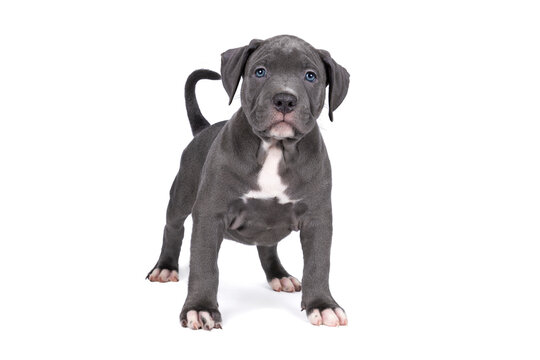
The XL Bully has been in the public eye more than ever due to them being involved in around 3 fatalities per year, as well as being involved in 23 incidents since the start of 2021 (GOV.UK, 2023). But are the XL Bullys solely responsible for what has occurred since their existence? Or is there a better solution to handle this occurrence, rather than simply banning them from the UK?
What was the XL Bully bred for?
Most breeds of dogs were bred for a specific purpose. For example, the English Springer Spaniel was bred for hunting (Ripley, 2017), meanwhile the German Shephard was bred for protection in World War 1 as war dogs and have now developed to assist in policing (Miller, 2017). The XL Bully is no different.
The XL Bully, which is considered a new breed amongst dogs, is associated with the American Bully Lineage (Davis, 2023). Although, various breeds are used to create them including Pitbulls, English Bulldog, Presa Canario and even the Cane Corso (White, 2023). They were bred to be physically bigger than most dogs, but with a stable and friendly temperament to be suitable for both family life and companionship. Moreover, their fur is considered low maintenance, being short haired in comparison to other breeds and requiring a brush weekly. Overall, they were designed to be the perfect dog within the home not required to be used for working purposes (Davis, 2023).

Does the XL Bully mix of breed really make them the perfect family dog?
Due to the XL Bully being made of various breeds of dog, to answer this question, we need to examine the breeds that are used to create them in order to answer this specific question.
Originally introduced to America in the 1800s by immigrants who brought them to help work on the land, farmers and ranchers used this breed as they were considered an all-round dog to assist with a variety of tasks. This was because they are considered a well-balanced athletic dog as they displayed great strength, endurance, agility and a friendly demeanour. They could even catch and stop feral pigs (American Kennel Club, 2024a)!
The English Bulldog, alongside the French equivalent, were bred from an Alaunt, which is now extinct. However, some argue to that the Alaunt is similar to Mastiffs today and were actually bred from them, rather than a supposed extinct breed of dog. Regardless, these types of bulldog were purely bred for their aggression, meaning they were ideal for farm work, such as rounding up cattle (Cosgrove, 2024). Furthermore, the bulldog is named for bullbaiting a gruesome English sport of tethering a bull to a stake in the ground and encouraging the English bulldog to try and bite the bulls nose. Their loose skin was also ideal so they could recover from an attack and keep fighting (Ripley, 2016).
Presa Canario can also be traced back to the Mastiff breed, Iberian Presa. Although, other breeds have been used to make this breed such as the Presa Espanol and Bardino Majorero which is a Fuerteventura sheepdog (Lesser, 2024), the breed itself is considered robust, well-proportioned in size while having a balanced temperament and are very self-confident. However, they can be suspicious of strangers, and if alerted they stay firm and vigilant. Due to this, they are considered best suited to guarding and traditionally used for herding cattle (American Kennel Club, 2024b).
4. Cane Corso
This final breed is a descendant from Roman war dogs, the canis pugnaces, supposedly related from the original Molossers which originate from the ancient Greek state of Epirus, which is now Albania. The Romans troops brought the canis pugnaces back to their homeland after their war with Macedonia, to breed further and become what they are known today, the Cane Corso. They were used to guard, hunt, and be an all-around farmhand, as they would never hesitate to work, find the tasks dull or too dangerous. They were even known to try and distract sows (female pigs), who were protective over their young, by grabbing their snout or ear, to provide the farmer an opportunity to sneak in and gather the piglets (Bovsun, 2021). Despite this, the breed itself is considered intelligent, loyal, eager to please, and intensely loyal with their humans, potentially making them a good contender for being a family dog (American Kennel Club, 2017).
When examining these breeds individually that have been used to create the XL Bully, the breed itself could be looked at either in a positive or negative light as to whether they are the perfect family dog. For instance, the American Bulldog and Cane Corso are both considered useful to guard and be seen as good breeds to protect families. On the other hand, these breeds were used on farms due to their strength and to hunt or distract other animals in an aggressive manner.
Conversely, if these are the breeds that are used to create the XL Bully, then it could be argued that it is not necessarily the XL Bully’s fault for their behaviour, but rather humans who have chosen to create the breed itself. According to Adolescent Dogs (2023), there are high levels of inbreeding meaning that the behavioural traits as mentioned above, are repeatedly being bred within the XL Bully, which in time causes genetic behavioural issues, to the point they cannot help how they act. Due to this conscious choice that humans have committed to breeding dogs, effectively we have caused an issue without necessarily considering the consequences first.
Should the UK have banned them?
Whether they should or should not have banned the breed is a huge question to answer, especially when there are various parts of legislation for the Government to consider alongside members of the public who have potentially lost their loved ones, or have been gravely injured. For instance, the government had to first consider the Breed Specific Legislation which is within the Dangerous Dogs Act that was passed in the 1990s. This part of the legislation is to either regulate or fully ban a certain dog breed purely based on their physical appearance (Battersea, 2021). When considering this, the XL Bully is potential made up of four breeds that we discussed earlier, therefore if this section of the act is purely based on appearance, how can they possibly tell which is the correct breed to ban?
Furthermore, in the UK due to various breeds being able to create the XL Bully, it is not considered a defined breed which makes it harder to distinguish which dogs can fall into the XL Bully category (White, 2023). This further supports the fact that the XL Bully cannot be considered dangerous based solely on its physical appearance, especially if it is not classed as a defined breed.
On the other hand, a breed’s appearance is not purely the sole reason as to why a dog is banned in the UK under the Dangerous Dogs Act, but also the amount of harm or deaths that breed has caused to human life is also considered within the act. According to Dr John Dudley who, has worked with dogs for more than 40 years, wrote a submission to the Government stating that since the act came into place 70 individuals have been killed by a dog between 1991 and 2025, indicating that despite the low figure, it reveals there is an increased danger to the public (2022).
Alternatively, others disagree with this figure and perspective as Amity Shroads and Kat Gusarova (2022) also wrote a submission to the Government stating that it is actually 63 individuals in England and Wales combined that have been killed by a dog between 1991 and 2015. They further stated that even with the act in place it has not been effective enough to prevent human deaths occurring, especially when three month before the act was in place, 99 cases were reported. They even go as far to say that “it becomes clear the DDA was not born out of any logical basis, but rather an emotional response influenced by sensationalism in the media at the time” (Shroads and Gusarova, 2022).
Is there an alternative choice?
Some charities and animal activists are petitioning for dog licenses to return to the UK, alongside registration for breeders in order to sell various breeds of dogs. For example the organisation, Right to Roam, stated in June 2024, before Labour became the new Government, they would like the next government to introduce these measures to better control dogs alongside a new right to roam for England that matches those put in place in Scotland, rather than simply banning them from the country. It is reported that also 76% of vets support this approach as currently breeders can produce up to three litters a year without being registered (Barkham, 2024).
In conclusion
Overall, to ban a specific breed of dog does seem extreme, overly emotional and the government attempting to please members of the public by trying to be seen as doing something. Although, personally, it does seem that this is the easiest solution for the Government to impose rather than simply considering other options, such as licenses, especially when we are mostly to blame for creating certain breeds originally. Alternatively it could be argued have the Government simply gone for the easiest solution, rather than tackling the problem at its core?
References
Adolescent Dogs. (2023). XL Bullies – don’t blame the dog. [online] Adolescent Dogs. Available at: https://www.adolescentdogs.com/post/xl-bullies-don-t-blame-the-dog. [Accessed 13 September 2024].
American Kennel Club. (2024a). American Bulldog Dog Breed Information. [online] Available at: https://www.akc.org/dog-breeds/american-bulldog/. [Accessed 13 September 2024].
American Kennel Club. (2024b). Presa Canario – Dog Breed Information. [online] Available at: https://www.akc.org/dog-breeds/presa-canario/. [Accessed 13September 2024].
American Kennel Club. (2017). Cane Corso Dog Breed. [online] American Kennel Club. Available at: https://www.akc.org/dog-breeds/cane-corso/. [Accessed 13 September 2024].
Barkham, P. (2024). Calls for new dog licences to better control unruly pets in England. [online] the Guardian. Available at: https://www.theguardian.com/lifeandstyle/article/2024/jun/15/calls-for-new-dog-licences-to-better-control-unruly-pets-in-england [Accessed 13 September 2024].
Battersea. (2021). Breed-Specific Legislation: A 30-Year Mistake. [online] Available at: https://www.battersea.org.uk/what-we-do/animal-welfare-campaigning/breed-specific-legislation. [Accessed 13 September 2024].
Bovsun, M. (2021). Cane Corso History: From Ancient Italy to the Brink of Extinction. [online] American Kennel Club. Available at: https://www.akc.org/expert-advice/dog-breeds/cane-corso-history/ [Accessed 13 September 2024].
Cosgrove, N. (2024). What Were Bulldogs Bred For? History, Ancestors & Anatomy. [online] Dogster. Available at: https://www.dogster.com/dog-breeds/what-were-bulldogs-bred-for. [Accessed 13 September 2024].
Davis, L. (2023). Everything you need to know about the XL Bully. [online] Fenrir Canine Leaders. Available at: https://fenrircanineleaders.com/en-gb/blogs/articles/everything-you-need-to-know-about-the-xl-bully#:~:text=The%20XL%20Bully%20breed%20is [Accessed 13 September 2024].
Dudley, D.J. (2022). Evidence on Dangerous Dog Breeds. [online] Committees of Parliament. Available at: https://committees.parliament.uk/writtenevidence/90960/pdf/ [Accessed 13 September 2024].
GOV.UK. (2024). Ban on unregistered XL Bully dogs now in force. [online] Available at: https://www.gov.uk/government/news/ban-on-unregistered-xl-bully-dogs-now-in-force#:~:text=The%20decision%20was%20made%20following. [Accessed 13 September 2024].
Lesser, J. (2014). The Perro de Presa Canario Is the Ideal Guard Dog. [online] The Spruce Pets. Available at: https://www.thesprucepets.com/presa-canario-dog-breed-4178086#toc-history-of-the-presa-canario [Accessed 13 September 2024].
Miller, J. (2017). What Was the German Shepherd Bred to Do? [online] American Kennel Club. Available at: https://www.akc.org/expert-advice/lifestyle/what-was-the-gsd-bred-to-do/. [Accessed 13 September 2024].
Shroads, A. and Gusarova, K. (2022). Evidence on Dangerous Dogs. [online] Committees of Parliament. Available at: https://committees.parliament.uk/writtenevidence/91199/pdf/ [Accessed 13 Sep. 2024].
Ripley, K. (2016). 9 Things You Didn’t Know About the Bulldog. [online] American Kennel Club. Available at: https://www.akc.org/expert-advice/lifestyle/9-things-you-didnt-know-about-the-bulldog/. [Accessed 13September 2024].
Ripley, K. (2017). 7 Things You Didn’t Know About the English Springer Spaniel. [online] American Kennel Club. Available at: https://www.akc.org/expert-advice/dog-breeds/english-springer-spaniel-facts/ [Accessed 13 September 2024].
White, N. (2023). XL Bullies – don’t blame the dog. [online] Adolescent Dogs. Available at: https://www.adolescentdogs.com/post/xl-bullies-don-t-blame-the-dog#:~:text=The%20XL%20Bully%20can%20be. [Accessed 13 September 2024].
 The Writing Tail
Leave a comment