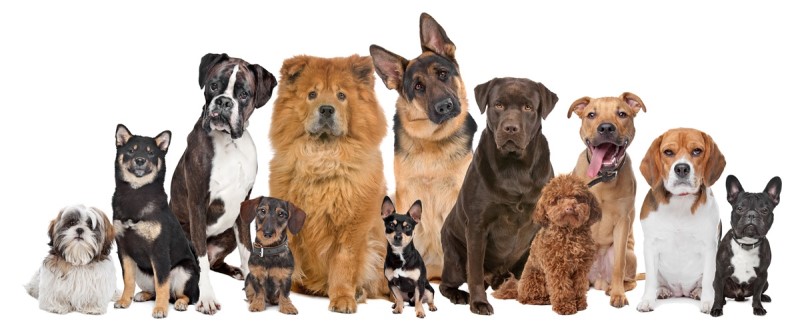
Today, there are supposedly a high number of dog breeds worldwide (Coren, 2013), and owners can’t seem to get enough of them. Labrador Retrievers, German Shephards, Cavalier King Charles Spaniels and even Poodles are ones that are in highest demand by the public due to their specific behaviours such as intelligence, calm and versatility (Pasols, 2024). Whereas, Chinese Crested, Chihuahuas and Pit Bulls are supposedly individuals least favourite, because of their supposed negative behaviour such as causing injury or bad temperament (Dahlgreen, 2015). However, this does not necessarily mean that certain breeds exhibit certain behaviours due to their breed, but potentially due to other reasons. Furthermore, it could be that in fact individuals perceptions that are at fault (Derr, 2001).
Wolves, Domestication and Breeding oh my!
In one of our previous articles, ‘Domestication & Why Cats Just Aren’t It’, dogs are briefly mentioned as being ‘equally part of humans lives’ when discussing domestication (The Writing Tail, 2024). This is so much so that they are in fact one of the first animals humankind domesticated 30,000 years ago when they were originally wolves. Humans provided them scraps and then in turn shelter and protection, which in turn caused the wolves to return the favour by assisting when hunting (Boehringer Ingelheim, 2024).
Since then, there have been 339 recognised breeds internationally according to the WCO, World Canine Organisation, of which ‘Great Britain, Germany and France are responsible for creating more than the rest of the world combined’. These are even divided in to 10 groups based on the dog’s purpose, function, appearance of size, such as Sheepdogs & Cattle dogs, Pinscher & Schnauzer, Terriers and Dachshunds (Coren, 2013).
Certain breeds, wild behaviours
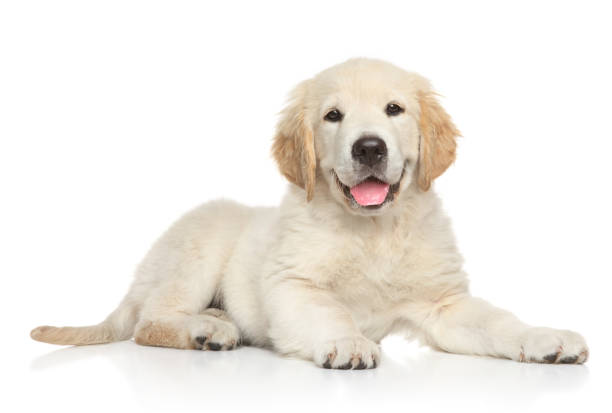
However, due to their being a vast amount of breeds since their original ancestor the wolf, it has been reported from the Kennel Club that owners select the breed based on their personality trait and whether it is similar to their own such as extroversion, openness, and emotional stability. Moreover, 63% admitted appearance influenced their decision (BBC, 2022).
Conversely due to this demand from owners for a specific breed, this in turn potentially alters canine behaviour, higher demand from the public means higher supply (Kramer, 2023), and places pressure on various canines to be consistent. Due to this pressure to be the perfect pet, this has caused negative backlash, for instance according to Dr. Jen’s Dog Blog (2016) since the 1940’s it has been proven that behavioural traits such as fearfulness and even aggression has been strongly influenced by breeding as they are operating on a pre-existing genetic blueprint.
On the other hand, others argue that this is not the case. According to Schade (2023) a study involving 18,000 dog breeds being observed ranging from their sociability to their ability confirmed that only 9% had their behaviour affected due to being a specific breed. Furthermore, they agreed that dog breeds behaviours were due to owners expectations of them rather than their breed. For example, owners often assume that Chihuahuas nip, due to their breed, but if it was any other breed the owner would believe it was due to their discomfort rather than their breed (Schade, 2023).
Conversely, rather than it being owners or the breed, others claim there is another issue that alter dogs’ behaviour altogether. For instance, according to Derr (2001) when speaking with certified behavioural experts that have continuously worked with anxious and obsessive compulsive disorder dogs, claim that there is an increased likelihood of aggression due to these disorders being left untreated, rather than solely blaming the breed. However, even they stated that owners assume certain breeds have certain behavioural tendencies, whereby the more aggressive dogs for example, are certain breeds such as pit bulls, when in reality any breed of dog can behaviourally become aggressive (Derr, 2001).
In conclusion…
When analysing all of the findings, it seems at first glance that not everyone can agree the relation between breeds and behaviour. Some argue, that due to continuous demand of specific dog breeds it is altering their behaviour, whereas others argue it could be due to breeds needing to meet certain expectations, or even their appearance.
Unfortunately, regardless of various reasons or causes there is one that everyone seems to agree on. It does not seem to be due to their genetics, but rather something that could potentially be altered, individuals’ perceptions on certain breeds. Due to owners automatically assuming a specific breed behaviour, rather than discovering the reasons as to why a breed of dog is behaving in that manner, they potentially assume that this could not be altered or corrected, and thus refuse to change the breed themselves.
References
BBC. (2022). People choose their dogs according to their own personality, say Kennel Club. [online]. Available at: https://www.bbc.co.uk/newsround/63201640. [Accessed 29 July 2024].
Boehringer-ingelheim.com. (2024). The human-dog relationship – a historical perspective. [online] Available at: https://www.boehringer-ingelheim.com/animal-health/our-responsibility/human-dog-relationship-historical-perspective#:~:text=There%20is%20archaeological%20evidence%20dogs. [Accessed 29 July 2024].
Coren,S. PhD., DSc, FRSC. (2013). How Many Breeds of Dogs Are There in the World? [online] Available at: https://www.psychologytoday.com/gb/blog/canine-corner/201305/how-many-breeds-dogs-are-there-in-the-world. [Accessed 29 July 2024].
Dahlgreen, W. (2015). Revealed: Britain’s most (and least) loved dog breeds | YouGov. [online] Available at: https://yougov.co.uk/politics/articles/13947-revealed-britains-most-loved-dog-breeds. [Accessed 30 July 2024].
Derr, M. (2001). It Takes Training and Genes To Make a Mean Dog Mean. The New York Times. [online] 6 Feb. Available at: https://www.nytimes.com/2001/02/06/science/it-takes-training-and-genes-to-make-a-mean-dog-mean.html. [Accessed 30 July 2024].
Dr. Jen’s Dog Blog. (2016). It’s Not ‘All In How You Raise Them’: The Role Of Genetics In Behavior. [online] Dr. Jen’s Dog Blog. Available at: https://www.drjensdogblog.com/its-not-all-in-how-you-raise-them-the-role-of-genetics-in-behavior/#:~:text=Since%20the%201940s%2C%20studies%20in. [Accessed 30 July 2024].
Kramer, L. (2023). How Does the Law of Supply and Demand Affect Prices? [online] Investopedia. Available at: https://www.investopedia.com/ask/answers/033115/how-does-law-supply-and-demand-affect-prices.asp#:~:text=Increased%20prices%20typically%20result%20in. [Accessed 30 July 2024].
Pasols, A. (2024). 20 Most Popular Dog Breeds 2024. [online] Forbes Advisor UK. Available at: https://www.forbes.com/uk/advisor/pet-insurance/popular-dog-breeds/. [Accessed 30 July 2024].
Schade, V. (2023). Does a Dog’s Breed Affect Their Behavior? [online] Available at: https://www.petmd.com/dog/behavior/does-breed-affect-behavior. [Accessed 30 July 2024].
The Writing Tail. (2024). Domestication and why cats just aren’t it. [online] Available at: https://thewritingtail.com/2024/04/24/domestication-and-why-cats-just-arent-it/ [Accessed 29 July 2024].
 The Writing Tail
Leave a comment